Plumbing Glossary Pinewood WA Homeowners Actually Use
Get one to three plain sentences per term, so you never nod along to a quote you do not understand.
Every plumbing glossary Pinewood WA homeowners find online is written for someone else. This one gives you one to three plain sentences per term, so you never nod along to a quote you do not understand.
Each definition is checked against Washington code or a public source. It is a plumbing glossary Pinewood Marysville WA homes can use, from 1970s ramblers over crawl spaces to condos off 51st Ave NE. Terms that change what you pay link to the page that explains the job, and our Pinewood plumbers explain any word on the phone.
Call (360) 925-8015 now. Tell us the word you heard and we explain it before any work starts.
Call (360) 925-8015
Sewer and Drains: Terms You Hear When a Pinewood Yard Tree Meets an Old Pipe
These are plumbing terms explained Pinewood Marysville WA style, starting underground where most surprises begin.
Side sewer
What is a side sewer? It is the pipe that carries wastewater from your house to the connection at the city sewer main. In most Washington cities the homeowner owns it from the house to the main, so confirm with Marysville Public Works at 360-363-8112. Our side sewer ownership guide covers it.
Sewer main
The sewer main is the city-owned pipe under the street that collects every home's side sewer. Marysville Public Works runs that collection system, so a blockage in the main is theirs and one in your side sewer is usually yours. The Marysville water and sewer guide shows who handles what.
Cleanout
A cleanout is a capped pipe on your sewer line that lets a plumber send in a cable or camera. If you searched what is a cleanout Pinewood Marysville WA yards will show you: look for a round cap near the foundation. Some older homes have none, and adding one is a sewer cleanout installation job.
P-trap
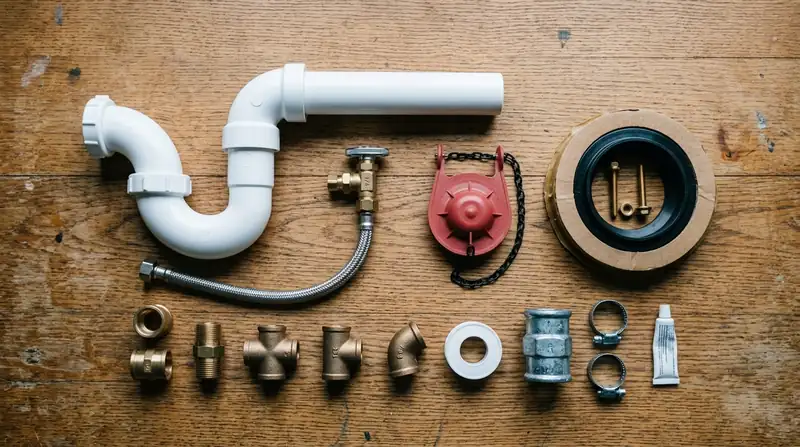
The P-trap is the U-shaped bend under a sink or tub that holds a plug of water to block sewer gas. It is also a common place for a kitchen clog and for a dropped ring to land. See kitchen sink clog repair.
Vent stack
A vent stack is the pipe that runs up through your roof so air can enter the drain system and let water flow. A blocked vent shows up as slow fixtures and gurgling drains.
Sewer camera inspection
A sewer camera inspection puts a waterproof camera on a cable through the cleanout so you see the inside of the line on a monitor. It finds cracks, roots and sags without digging. Ask for one before buying an older house, and read our pre-purchase sewer inspection page.
Hydro jetting
Hydro jetting cleans a pipe with high-pressure water from a nozzle instead of a cable. It scours grease and scale off the pipe wall instead of poking a hole through the clog. Our hydro jetting page shows when it beats a snake.
Drain snake
A drain snake, also called an auger, is a flexible steel cable that breaks up or hooks a clog. It reaches from a shower drain to a main line, depending on the size. Our drain cleaning page explains which tool we pick and why.
Root intrusion
Root intrusion is when tree roots grow into a sewer pipe through a joint or crack, chasing moisture. Big evergreens are common around Pinewood, so roots are a fair suspect when a line keeps clogging. Our tree roots in sewer lines guide lists the signs.
Belly
A belly is a low spot where a sewer pipe has settled, so waste pools instead of flowing away. A clog that returns in the same place points to one, and a camera confirms it. Fixes are covered under sewer line repair.
CIPP
CIPP means cured-in-place pipe: a resin-soaked liner pulled into the old pipe and hardened with heat or light, leaving a new pipe inside the old one with little or no digging, as Portland's sewer bureau describes it. Whether it fits depends on the pipe's condition. See trenchless sewer repair.
Backwater valve
A backwater valve is a one-way valve on the sewer line that lets waste out but closes if sewage tries to flow back in. It matters most if any drain in the house sits lower than the street. Read about backwater valve installation.
Main line clog
A main line clog is a blockage in the large pipe every drain feeds. You see several fixtures back up or gurgle together, not one sink. Stop running water and call us, then read our main sewer line clog page.
Water Heaters: What the Tags and Parts on Your Pinewood Garage Heater Mean
Plumbing terms explained in Pinewood WA garages and utility closets usually start with the tank, so we start there too.
Anode rod
The anode rod is a metal rod, usually magnesium or aluminum, inside the tank that corrodes so the steel tank does not. Once it is used up the tank itself starts to rust, which is a common road to a leak. See leaking water heater.
T&P valve
The T&P valve, short for temperature and pressure relief valve, is a safety valve that opens to release water if heat or pressure climbs too high. Washington's water heater rule, WAC 51-56-0500, requires a combination T&P valve on storage heaters. Never cap it. See water heater repair.
Expansion tank
An expansion tank is a small tank on the cold supply that absorbs the extra volume when water heats and expands. You need one when your plumbing is a closed system, such as with a pressure reducing valve. Without it, pressure spikes can make the T&P valve drip. See water heater installation.
Seismic strapping
Seismic strapping anchors the tank to the wall so an earthquake does not tip it. The same WAC rule calls for straps in the upper and lower third of the tank's height, and Puget Sound quakes make that a real rule. Our permit and strapping page has the details.
Sediment
Sediment is minerals and grit that settle at the bottom of a tank. Popping or rumbling while the water heats is the classic sign, and a thick layer makes the heater work harder. A flush can help a tank still in good shape. See no hot water.
Pilot light and thermocouple
The pilot is the small standing flame on many gas heaters, and the thermocouple is the sensor that shuts the gas off if that flame dies. A worn thermocouple is a frequent reason the flame will not stay lit. Read why a pilot light will not stay lit.
Tankless water heater
A tankless water heater heats water as it flows, so there is no storage tank to run out. It gives continuous hot water within its flow rating, and gas models need the right gas supply and venting. See tankless water heater installation.
Drain pan
A drain pan is a shallow tray under a tank that catches a leak and can be piped to a safe drain. Installers commonly add one where a leak would damage finished space, like a laundry closet or a condo unit. It is part of a proper water heater installation.
Water heater permit
A water heater permit is the city's approval to install or replace a heater, followed by an inspection. Marysville Building Services handles plumbing, mechanical and water heater permits at 360-363-8000, so confirm what your swap needs. See permit and strapping.
Supply Pipes and Pressure: What Runs Behind Pinewood Walls and Under the Street
Main shutoff valve
The main shutoff valve stops all water to the house. Find it now, usually where the line enters near the front wall, in a garage or in a crawl space, before a burst pipe makes you hunt for it. Our burst pipe repair page covers the first minutes.
Water meter
The water meter is the city's device, usually in a box near the curb, that measures every gallon you use. Watch the small flow dial with every tap off: if it moves, something leaks. Marysville Utility Billing at 360-363-8001 handles leak adjustments. See our high water bill leak guide.
Service line
The service line, also called the water line, is the underground pipe from the city main and meter to your house. Marysville runs a galvanized service line replacement program, so ask Public Works about yours. See water line repair.
PRV
A PRV, or pressure reducing valve, is the bell-shaped regulator on the incoming water line that lowers street pressure to a safe level. Plumbing codes generally call for one when supply pressure passes 80 psi. Read about normal water pressure.
Static water pressure
Static water pressure is what a gauge reads at an outdoor faucet with nothing running, measured in psi, or pounds per square inch. Most homes do best between 40 and 80 psi. A cheap gauge tells you fast, and our low water pressure repair page explains the rest.
PEX
PEX is cross-linked polyethylene, a flexible plastic supply pipe used in newer and remodeled homes. It bends around corners with fewer joints and does not corrode like metal. See PEX pipe repair.
Polybutylene
Polybutylene is a gray plastic supply pipe used from about 1978 to mid-1995 that can break down from a reaction with disinfectants in water, according to home inspectors. A Pinewood house built in that window may have it. Check is my house polybutylene or see polybutylene pipe replacement.
Galvanized pipe
Galvanized pipe is zinc-coated steel found in older homes, and it rusts from the inside until the opening narrows. Weak pressure and brown water at first draw are common signs. See galvanized pipe replacement.
Copper pipe
Copper pipe is the rigid metal supply line used in many mid-century and later homes, joined by soldering or push fittings. It lasts for decades but can develop pinholes. See copper pipe repair.
Pinhole leak
A pinhole leak is a tiny hole in a pipe wall, often from corrosion inside, that sprays a fine jet or seeps behind a wall. One may mean the rest of that pipe is thinning too. See pinhole leak repair.
Water hammer
Water hammer is the bang you hear when a valve shuts fast and moving water stops suddenly. A water hammer arrestor is a small shock absorber that cushions the hit, and high pressure makes it worse. See pipe repair.
Backflow preventer
A backflow preventer stops dirty water from flowing backward into the clean supply. Hose faucets use a small vacuum breaker, and irrigation uses larger assemblies. The City of Marysville advises insulating backflow devices in winter. See hose bibs and irrigation.
Slab leak
A slab leak is a supply-pipe leak under or inside a concrete slab. A warm spot on the floor, an unexplained bill jump or the sound of running water are the signs. See slab leak detection.
Repiping
Repiping is replacing a home's supply pipes, all or in part. It is worth a hard look with polybutylene, galvanized pipe or repeated pinholes. See whole house repiping.
Water hardness
Water hardness measures dissolved calcium and magnesium. Marysville does not publish a hardness number, and Everett's supply, which feeds part of Marysville's water, averaged a very soft 12.5 ppm in its 2025 summary. Ask before buying a softener, starting with our softener guide.
Fixtures: The Small Parts Behind Most Pinewood Kitchen and Bathroom Calls
Angle stop
An angle stop is the small valve on the wall or floor feeding a faucet or toilet. Turn it off to fix one fixture without shutting off the house. Old ones can seize or drip when turned, so do not force them. See sink repair.
Flapper
The flapper is the rubber seal at the bottom of a toilet tank that lifts to flush and drops to reseal. A worn flapper is the usual reason a toilet runs. See running toilet repair.
Fill valve
The fill valve refills the tank after a flush and shuts off at the right water level. Hissing, a slow refill or a toilet that runs on can trace back to it. See toilet repair.
Toilet flange
The toilet flange is the ring on the floor that the bowl bolts to over the drain. A cracked or rusted flange lets the toilet rock and can leak at the base. See toilet flange repair.
Wax ring
The wax ring is the seal between the toilet and the flange that blocks leaks and sewer gas. It is replaced whenever a toilet is lifted. See toilet installation.
Shower valve cartridge
The cartridge is the insert inside a shower handle that mixes hot and cold. When it wears you get scalding or cold bursts or a drip at the head. See shower valve repair.
Aerator
The aerator is the small screen at a faucet tip that mixes air into the flow. Grit clogs it, so weak flow from one faucet often means a clogged aerator, not a pipe problem. See faucet repair.
Garbage disposal
A garbage disposal is a grinder under the sink that chops food scraps small enough for the drain. It is not a trash can, and grease and fibrous scraps still clog the line. See garbage disposal repair.
Sump pump
A sump pump sits in a pit and moves groundwater away from a crawl space or basement. Where the ground stays wet after a November downpour, a working pump matters. See sump pump repair.
Hose bib
A hose bib is the outdoor faucet. Freezing water can crack the pipe behind it, so unhook hoses before a cold snap. See outdoor faucet repair.
Gas shutoff
A gas shutoff is the valve at your meter or appliance that stops gas flow. If you smell gas, leave first, then call PSE at 1-888-225-5773 or 911 and touch no switches. Our gas line plumber page covers appliance work.
Permits, Licenses and Quotes: Words on Paper Before Work Starts
Plumbing permit
A plumbing permit is city approval for certain plumbing work, checked by an inspector afterward. Marysville Building Services, at 360-363-8000, tells you whether your job needs one through its permit office. See doing your own plumbing in Washington.
Licensed, bonded and insured
Licensed means the contractor is registered with Washington L&I, bonded means a bond backs claims against them, and insured means liability coverage. We are a licensed, bonded and insured Washington plumbing contractor, and you can check any plumber on the L&I contractor lookup. Our license check guide shows how.
Quote
A quote is a price and scope you agree to before work starts. An estimate is a rough range that can move. Read how we handle it on our quote promise, and see the typical ranges in plumbing costs in Marysville.
811
811 is the free call to have buried utilities marked before you dig, and Washington law asks for it at least two business days ahead, per the state utilities commission. Do it before a fence or deck goes in. See call 811 before you dig.
If a word is missing from this plumbing glossary in Pinewood WA, ask us and we add it. Treat this plumbing glossary 98270 residents can use as a starting point, and tell us on the phone what you heard.
Call (360) 925-8015 now. A real person answers, and we explain the job before we quote it.
Call (360) 925-8015
Plumbing Words Pinewood Homeowners Ask About Before They Call
What is the difference between a clog and a sewer backup?
A clog blocks one fixture, while a backup sends wastewater up from your lowest drain because the main line or side sewer is blocked. One slow sink is usually a clog. Several fixtures gurgling, or water rising in a floor drain or tub, means stop using water and call right away.
Which of these terms mean I should call at night?
Call right away for a sewer backup, a burst pipe, a leaking water heater tank, no water at all or a gas smell. A dripping angle stop, a running flapper or a slow aerator can wait until morning. If you cannot tell which one you have, call and we help you sort it out.
Why do two plumbers use different words for the same repair?
Trades use overlapping names, like side sewer and lateral, or spot repair and section replacement. Ask each plumber which pipe, where it sits, and what gets replaced. Compare scope first, then the number. The price gap often comes from what each quote includes, not from the wording.
Should a quote name these parts before work starts?
Yes. A fair quote names the pipe or part, where it is, and what the work includes. We give you the quote and your options before we start, and exact cost depends on access and how far the problem runs, so we confirm it on the phone. If a quote is vague, ask for detail.
Does licensed, bonded and insured mean the same as certified?
No. Licensed and bonded describe the contractor's registration with L&I and the bond behind it, while insured covers liability. Certified refers to the person: Washington certifies plumbers under RCW 18.106. Check both on the L&I lookup before you let anyone into your home, including us.
What if I still do not understand what my plumber told me?
Ask them to show you the part, describe it in plain words, and say what happens if you wait. A good plumber will not mind. If the explanation stays fuzzy, pause before you approve the work. We explain on the phone first, so the job makes sense before anyone arrives.
Who do I call at the city about a permit or a sewer question?
Call Marysville Building Services at 360-363-8000 for permits and Marysville Public Works at 360-363-8100 for water. For sewer collection, call 360-363-8112. If you plan to dig, call 811 first. For a gas smell, leave the house and call PSE at 1-888-225-5773 or 911.
Where do I find my main shutoff valve and water meter?
The main shutoff is usually where the water line enters the house: near a front wall, in a garage or utility closet, or in the crawl space. The city's meter is typically in a box near the curb. Find both in daylight, tag the valve, and tell us on the phone if you cannot locate it.
Call (360) 925-8015