Polybutylene Pipes Marysville WA Pinewood WA: Is Your House on the List?
Built from about 1978 to mid 1995? Look for flexible gray pipe stamped PB2110 near the water heater or main shutoff. It takes about ten minutes.
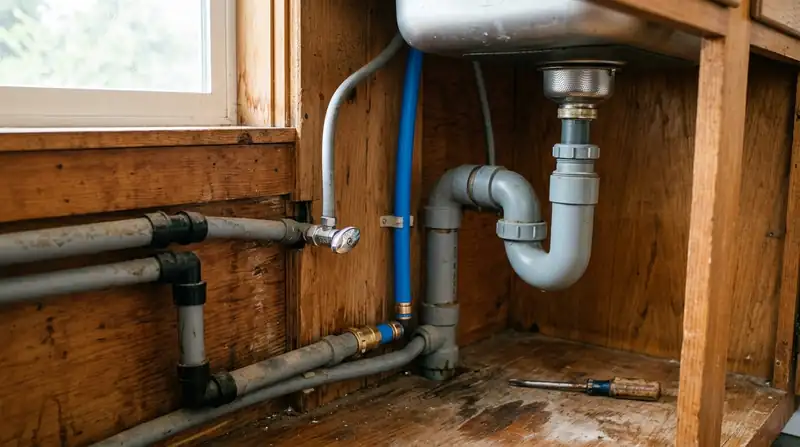
Your house may have polybutylene if it was built between about 1978 and mid-1995. Look for flexible gray plastic pipe stamped PB2110 near the water heater or main shutoff.
That is how to tell if you have polybutylene pipes without opening a wall. The polybutylene pipes Marysville WA Pinewood WA homeowners can spot on their own take about ten minutes to check.
Call (360) 925-8015 now if you find gray pipe that is weeping. Tell us your address and we give you the arrival window on the phone.
Call (360) 925-8015
Short version: what to check before you read further
- Year built. Polybutylene went into homes from about 1978 to mid-1995, according to the National Association of Certified Home Inspectors.
- Color. Usually gray, sometimes white, silver, black or blue.
- Stamp. Look for PB2110 printed along the pipe.
- Shape. Flexible and curved, not rigid like copper, in half-inch to one-inch sizes.
If two or more match, treat it as polybutylene until someone proves otherwise. Houses from that era are where to look for the polybutylene pipes Marysville WA 98270 owners worry about.
Does a Pinewood house built in the 1970s have it?
Maybe, and the year matters. Listing sites put Pinewood's median build year near 1976. That is a soft number, but it tells you something. Roughly half the homes here went up before polybutylene existed.
The map of polybutylene pipes Marysville WA in Pinewood WA follows build year, not street. Those older ramblers usually have copper or, in the oldest houses, galvanized steel. A 1976 house is less likely to have original polybutylene than a 1985 house.
Two catches. A remodel or addition after 1978 may have used it in one part of the house. And a house built in 1990 may carry gray plastic even though the neighbor's 1972 rambler does not. The date on the county record helps, but your eyes help more.
Four spots where gray plastic pipe shows itself
You do not need to cut anything. Basic polybutylene identification 98270 owners can do takes a flashlight and these four spots:
- The water heater. Look at the two supply lines running into the top of the tank. Flexible gray pipe here is the most common find.
- The main shutoff and meter connection. Blue or black pipe near the point where water enters the house may be polybutylene. Underground runs are often black.
- Under sinks. Follow the supply lines from the shutoff valves back to the wall.
- Crawl spaces, basements and attics. Pinewood ramblers with crawl spaces are worth a look, wearing gloves, with a flashlight and someone who knows you are down there.
Fittings are a clue too. Early systems used plastic fittings, and later ones used metal crimp rings. Plastic fittings are the ones that tend to give out first, according to a plumbing company guide on polybutylene.
Pipe inside the walls tells the truth, but other plastic pipe sometimes gets mistaken for it. If you are unsure, take a clear photo and call us.
Why this pipe gets a bad name
Here is the problem in plain words. Certain disinfectants in city water can react with polybutylene and make it flake from the inside. Tiny cracks deepen over time until water gets through the outer wall, according to the inspectors' association page.
The pipe can look fine from outside and still be weak. A slow weep can become a burst without much warning.
That does not mean every polybutylene house has a leak today. It means the risk climbs with age, and nobody can promise how many years a given run has left.
Lawsuits over this pipe led to settlements that reached about one billion dollars, per the same source. Do not count on that money. Treat the pipe as your own decision now.
You found gray pipe. What next?
Do not panic, and do not cut into it yourself.
- Look for wet spots. Stains on drywall, a musty smell in a closet, or a warm spot on the floor can all mean a slow leak.
- Check the meter. Turn off every tap and appliance. If the dial moves, water is escaping somewhere. Our high water bill leak guide walks through the test.
- Locate your main shutoff and make sure everyone at home can find it.
- Call your insurer. Some carriers ask about polybutylene, and some exclude or limit water damage from it. Ask before something fails, not after.
- Get options in writing. Repiping the whole house is one path. Replacing the most exposed sections first is another. Our polybutylene pipe replacement page explains both.
We give you the quote and the options before any work starts. No pressure, and the floors get covered.
What we check on polybutylene pipes Marysville WA Pinewood Marysville WA homes
We start with what you can see: the heater connections, the main, the manifold if there is one, and any exposed runs. Then we check pressure, because high pressure is hard on any old pipe. We tell you what we find, what it means, and what we would do in your shoes.
If a leak is active, we shut water off to that section and stop the damage first. Bigger decisions wait until you have the numbers.
A repipe usually needs a plumbing permit, and Marysville Building Services is at 360-363-8000. Our whole-house repiping page shows what that looks like from our side. The rest of what we do is on our homepage.
Questions about gray plastic water pipes Pinewood WA homeowners ask
How do I know if I have polybutylene pipes?
Check the year built first. Homes from about 1978 to mid-1995 are the ones at risk. Then look near the water heater, main shutoff and under sinks for flexible gray, blue or black pipe stamped PB2110. If you cannot tell, send us a photo on the call.
Is polybutylene pipe illegal or banned?
It is no longer used in new construction, and manufacturing stopped in the mid-1990s. Owning it is not a crime. It also is not something to ignore, because the pipe can fail without warning. Talk to a plumber and your insurer about a plan.
Does every polybutylene house have leaks?
No. Many run for years without trouble. The risk is that the pipe weakens from the inside, so a fine-looking run can still crack. Water pressure, disinfectant exposure and age all play a part, and nobody can predict a date.
Should I replace it before it leaks?
Many owners do, because a planned repipe is calmer than a flooded floor at 2 a.m. That is your call. We will look at what you have, tell you where the risk sits, and give options before any work begins.
Can I still buy a home with polybutylene?
Yes, but ask what it will do to insurance and price. Have a plumber look at the visible runs before you close, and treat replacement as a real cost in your negotiation. A photo of the pipe and an honest look are worth more than guessing.
Call (360) 925-8015 now. Tell us what you found and we give you the next step, plus the arrival window, on the phone.
Call (360) 925-8015